


The Speyer Pericopes
A Monument to the Art of the Romanesque Book
Speyerer Evangelistar
The Speyer Pericopes: The Manuscript
Sacred Book Art
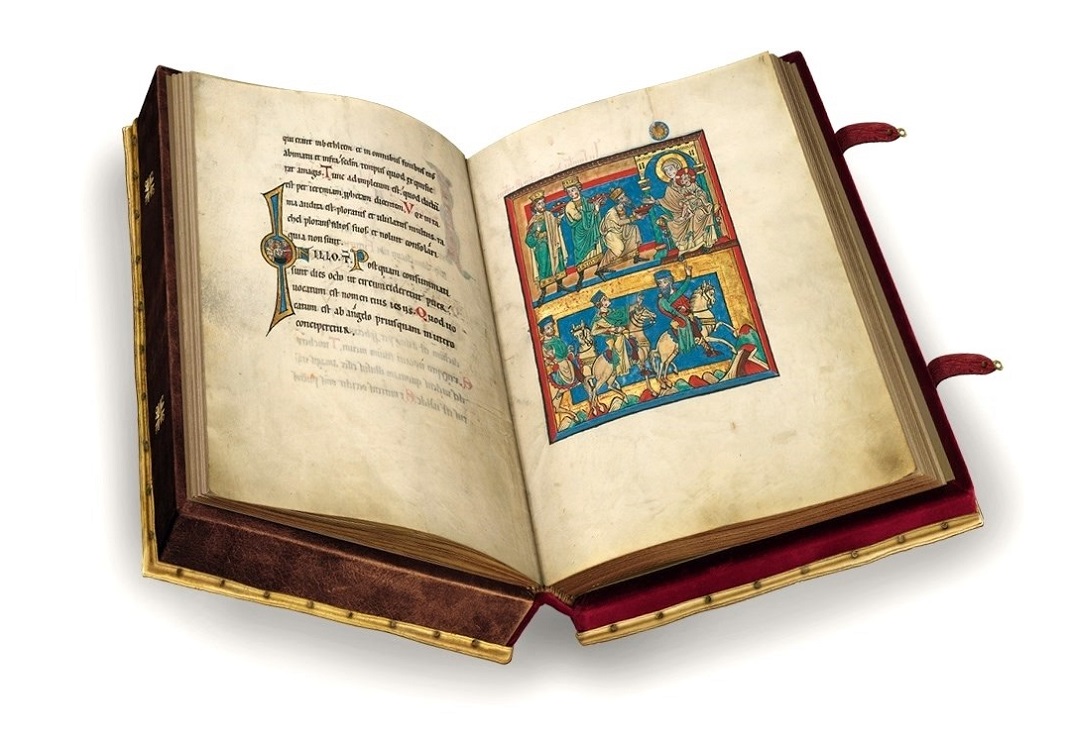
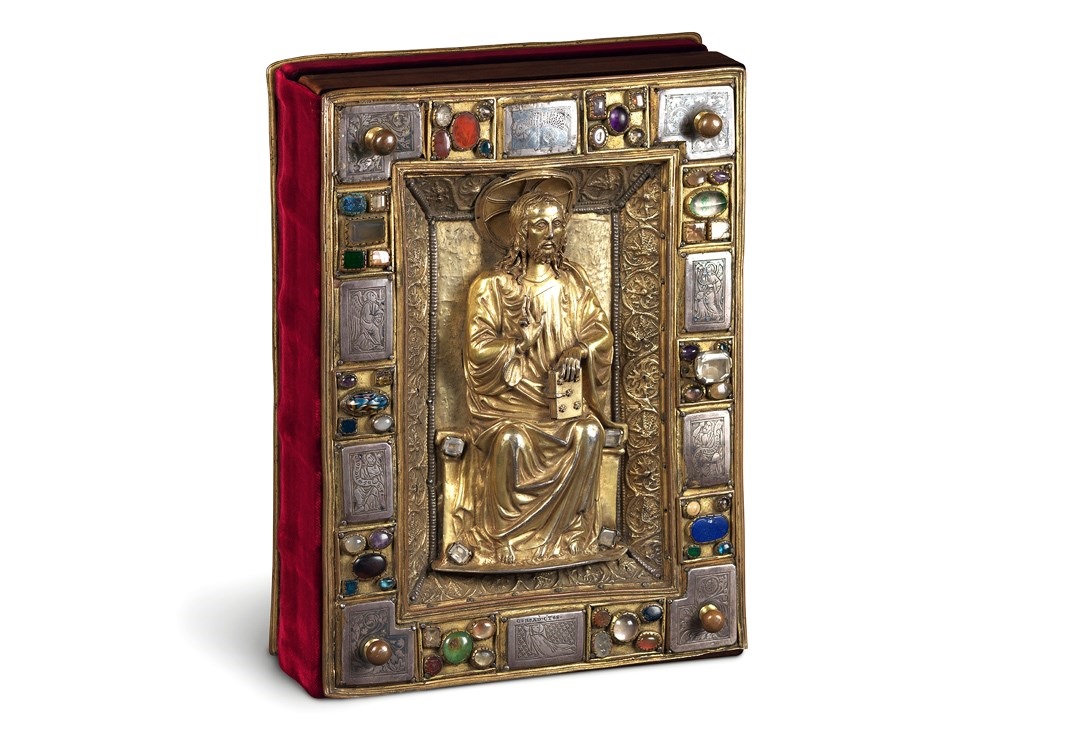
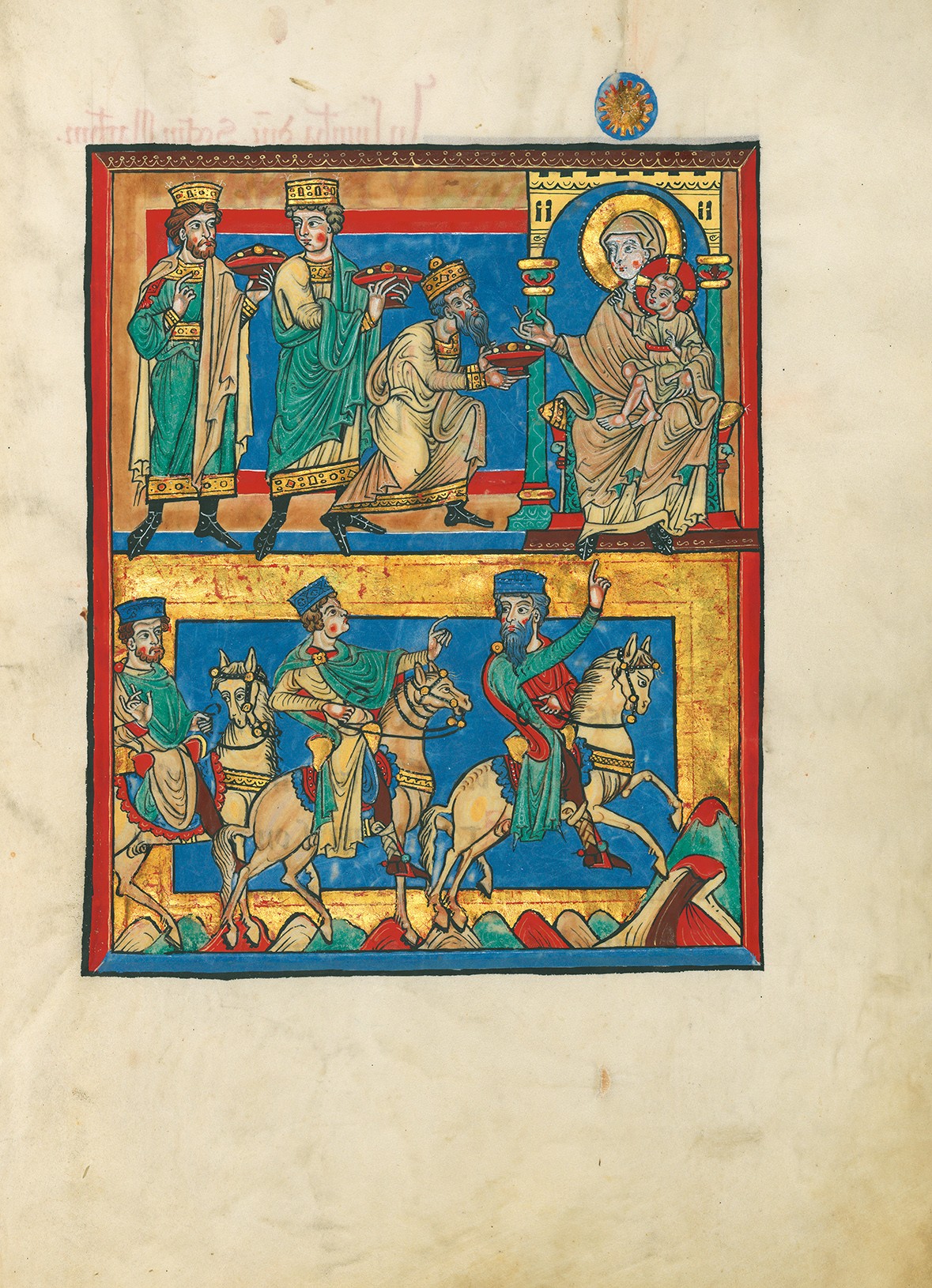
A book of pericopes contains the wording of the passages from the Gospels which are read at Mass during the liturgical year. In the Romanesque period, the Scriptures were highly venerated as the expression of the divine revelation. Reflecting the deep reverence for the texts it contains, the manuscript is luxuriously illuminated and furnished with a treasure binding. The manuscript of the Speyer Pericopes and the binding are an inseparable whole. Thus, the golden figure of Christ on the front cover is not only an ornament but also an expression of the theological program. The same applies to the 16 miniatures sparkling with gold, depicting scenes from the life and passion of Christ, which were executed by the three illuminators from Speyer or Trier.
The Treasure Binding
Only a few Romanesque manuscripts have retained their original binding. Though the binding was thoroughly reworked around 1500, we are fortunate to see the Speyer Pericopes with the original binding mostly preserved. The 10 niello plates and more than 50 precious stones, the enamelled glass stone and the antique gemstones on the front cover date from the period of origin. The figure of Christ enthroned in the central panel, however, was renewed in the Late Middle Ages and replaced by the current gilded silver figure. Stylistically the niello plates have been associated with the work of certain Trier goldsmiths from the time around 1220 which obviously also served as a model for the miniatures.
Custos Konrad
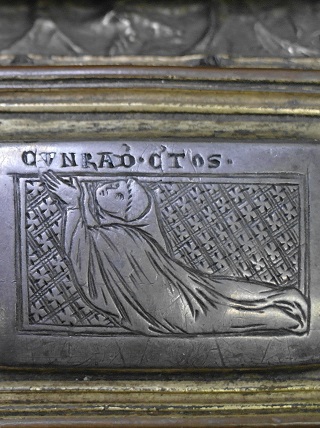
The niello plate at the lower edge of the front cover bearing the inscription “CVNRAD[us] C[us]TOS” is generally considered a donor portrait. It shows a cleric in a monk’s habit lying on the ground. Raising his hands in adoration, he presents his book to the oversized figure of Christ above. The figure depicted has been identified as Konrad von Tann, cathedral custodian of Speyer. About 1220, he could have commissioned the production of a pericopes manuscript for the liturgical feast days celebrated in Speyer Cathedral. In addition to his religious motivation, such a generous gift would certainly help to further his career within the church hierarchy. In 1233, Konrad became Bishop of Speyer.
Speyerer Evangelistar
Under the Magnifying Glass: New Stimuli for the Masters of the Speyer Pericopes
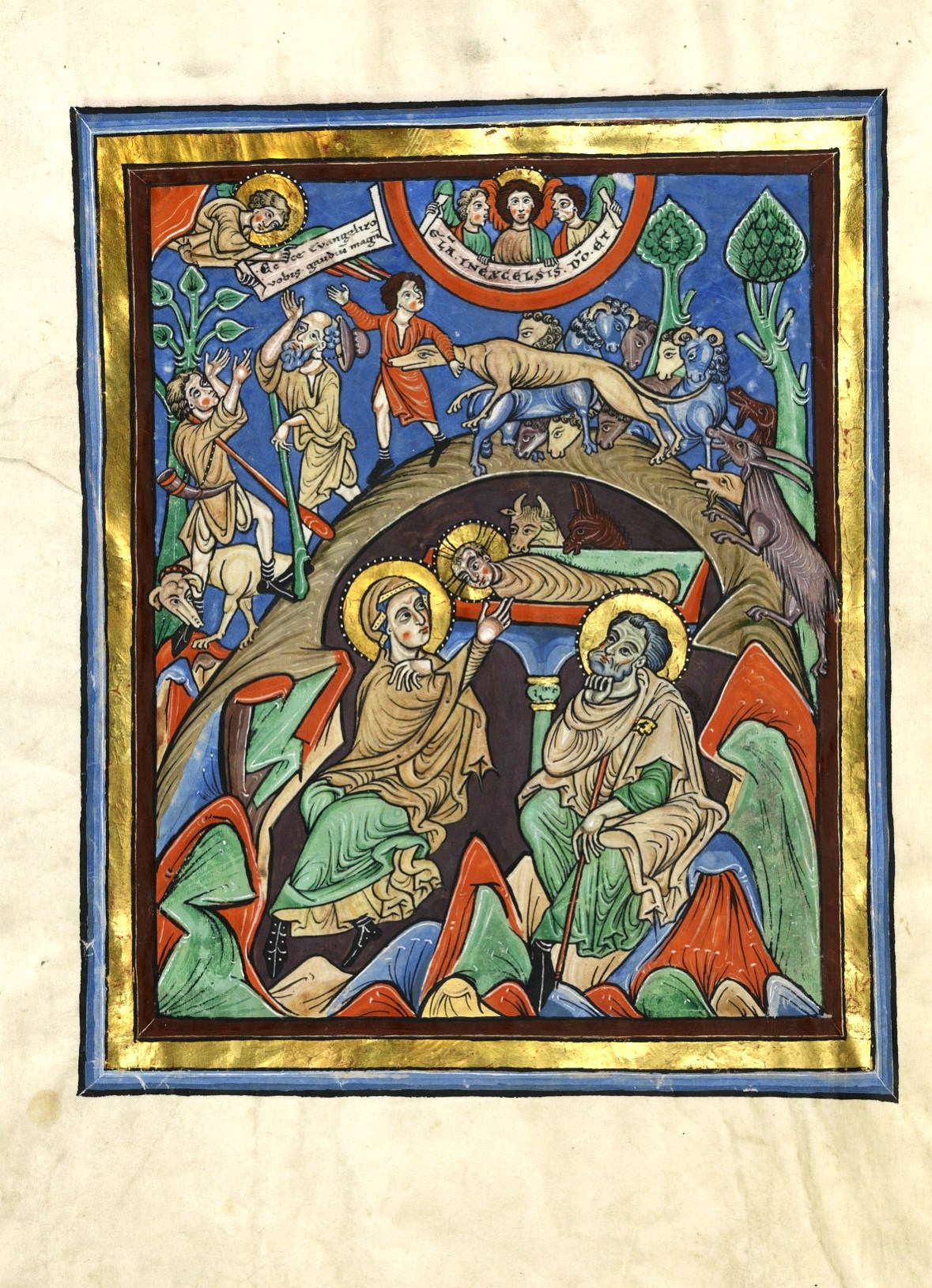
Speyerer Evangelistar
The Speyer Pericopes: The Edition
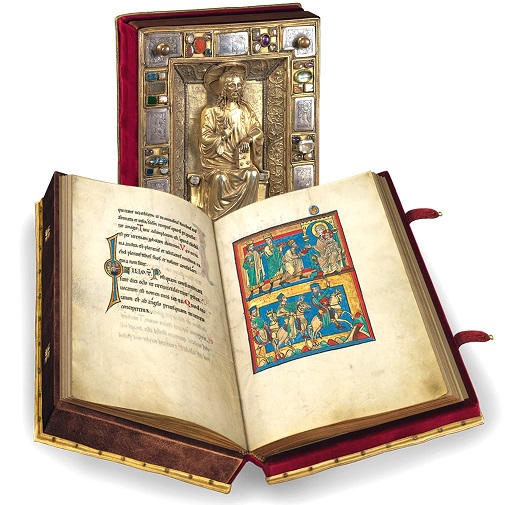
The Manuscript and the Facsimile at a Glance
800 years ago, highly accomplished illuminators and goldsmiths created the Speyer Pericopes, a first-rate synthesis of the arts. For reasons of conservation the opened manuscript cannot be exhibited in public. The facsimile edition true to the original makes the manuscript accessible again.
Manuscript: Karlsruhe, Badische Landesbibliothek, Bruchsal 1
Date of Origin: c. 1220
Place of Origin: Speyer or Trier
Dimensions: c. 33.2 x 25.3 cm
Extent: 154 pages (77 leaves)
Artists: three masters from Speyer or Trier
Patron: Konrad IV von Tann, Cathedral Provost and later Bishop of Speyer Cathedral
Illumination: 17 full-page miniatures with 21 individual scenes, 70 richly ornamented and historiated initials, brilliant colour pigments, tooled gold surfaces
Binding: treasure binding, gilded figure of Christ in relief on the front cover, 10 silver panels in the niello technique, 54 mounted or carved gemstones
Commentary Volume for the Facsimile Edition by Harald Wolter-von dem Knesebeck / Ute Obhof
Print run: 280 copies
The facsimile is edited under the patronage of His Excellency, Bishop Karl-Heinz Wiesemann, Diocesan Bishop of Speyer.
Speyerer Evangelistar
Enjoy Viewing 10 Sample Pages:
A Glance at the Facsimile
The section from the Speyer Pericopes shown here comprises fols. 13r–17v. The sequence contains several full-page miniatures. The narrative panels represent scenes from the life of Christ. On fol. 15r there is a miniature inserted from the Old Testament, depicting the Closed Gate from the prophecy of Ezekiel.
On the text pages of fols. 14r and 15r, two colourful foliate initials attract the viewer’s attention.
Speyerer Evangelistar
A Challenging Production: fac simile
Sparkling Gold Areas
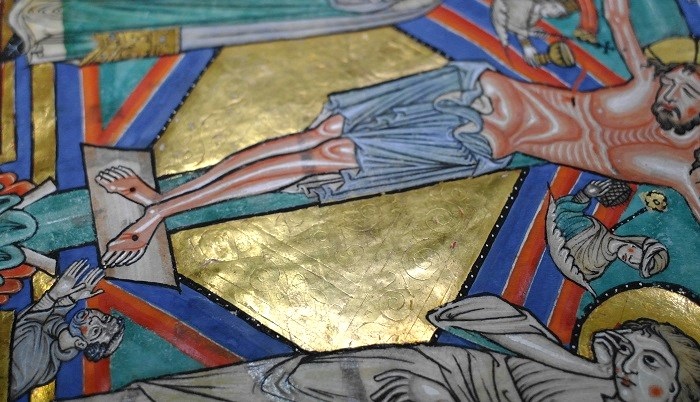
Making the facsimile of the Speyer Pericopes requires additional steps to reproduce the gold leaf applied to the large gold grounds of the miniatures and the initials. Since there is no technique adapted to distinguishing clearly the gold and silver areas from the colour surfaces, the lithographer has to prepare these parts painstakingly in separate print runs. Once the gold has been applied, some of the gold grounds have to be incised with an arabesque-like pattern. To reproduce convincingly the traces of ageing, a patination is finally applied.
A Replica of the Binding
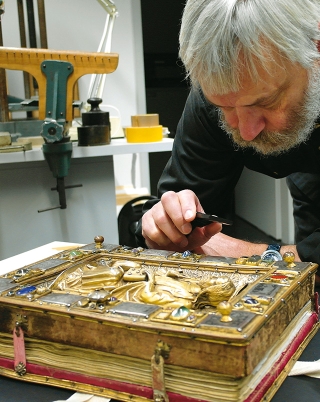
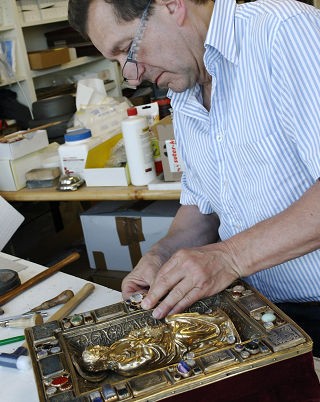
The facsimile binding of the Speyer Pericopes is a faithful replica of the medieval treasure binding consisting of more than 150 components. Numerous specialists are needed to complete each copy. First, the front cover is recorded with a 3D scanner so that a three-dimensional mould can be constructed. Experts in metal casting and galvanization produce the three-dimensional figure of Christ and the ornament frame. Gemmologists choose suitable gemstones matching the original stones as closely as possible and make the replicas. Goldsmiths and engravers reproduce the niello plates.
Speyerer Evangelistar
The Facsimile Folder for the Edition
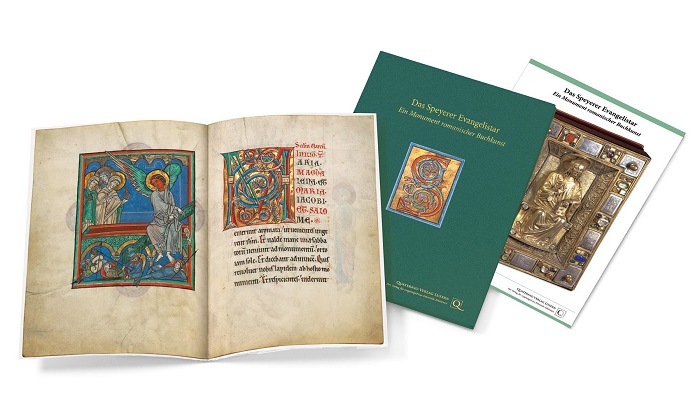
The four-page facsimile leaf shows the Crucifixion and the three Marys at the empty tomb on Easter morning, depicted in two full-page miniatures (fols. 31r and 31v), as well as a splendid ornamented initial (fol. 32r) and a figure initial formed by a saint (fol. 32v). Detailed captions elaborate on the wealth of the book illumination. In a 16-page brochure, learn more about the German Late Romanesque period and the special challenges of the facsimile edition of this magnificent manuscript.
Speyerer Evangelistar